
 GROWTH GUIDE
Turn Lead Ads Into Booked Jobs for Local Services with Fast Webhooks
Lead ads (native lead forms on Google and Meta, or landing page conversion campaigns) can produce more booked appointments for service businesses when you pair the right format with a short qualifying form, reliable webhook delivery, and fast follow-up. The format matters less than what happens after the click: scoring, routing, and speed to contact. The real KPI is qualified appointments or booked jobs, not the number of form fills you collect.
TL;DR:
- Focus on fast, personalized follow-up for search-based leads, as they typically have higher intent but lower volume.
- Use native forms for simple, low-ticket services and landing pages for high-value, complex offers that require detailed trust signals.
- Implement quick lead delivery through webhooks and real-time routing to ensure leads are contacted within minutes, not days.
- Prioritize quality over quantity by scoring leads on fit and urgency, routing high-score leads immediately, and tracking booked appointments rather than raw lead counts.
- Ensure compliance with privacy and telemarketing rules, linking a privacy policy and maintaining records of consent to avoid legal issues.
Table of Contents
- Where lead ads fit in a service business funnel
- Lead-ad formats: Google, Meta, LSAs, and landing pages
- Landing pages vs lead forms: a short decision checklist
- Channel mix and targeting for service advertisers
- Designing forms that filter out junk leads
- Tracking and lead delivery that actually works
- Turning form fills into booked appointments
- Compliance and privacy basics you can’t skip
- How Service Grower removes the implementation friction
- What I’ve seen work and what trips people up
- Getting started without piecing it together yourself
- FAQ
- Sources
Where lead ads fit in a service business funnel
Lead ads work differently depending on where a prospect sits in the buying process. Search based formats, like Google lead form assets, capture people already looking for a plumber, a dentist, or a moving company this week. Social formats, like Meta lead ads, create demand among people who were not actively searching, but fit your ideal customer profile.
That distinction changes how you should use each one:
- Search intent is high but volume is often lower, so every lead deserves a fast, personal follow-up.
- Social demand creation produces more volume at a lower average intent, so qualifying questions matter more.
- Mobile capture through native forms removes the friction of a slow landing page, which helps on 4G or spotty Wi-Fi.
- Appointment rate and booked job rate are the numbers that tell you whether the campaign is actually working, not raw lead count.
A campaign that generates 100 leads and books 8 jobs is outperforming one that generates 300 leads and books 6, even though the second looks busier in the ad dashboard.
Lead-ad formats: Google, Meta, LSAs, and landing pages
Each platform handles lead capture differently, and the differences affect both lead quality and how much setup work you need to do.
- Google lead form assets run on Search and Performance Max. They support conditional answers, qualifying responses, and OTP phone verification, and Google requires a published privacy policy linked on the form before it can serve.
- Meta lead ads capture contact details inside Facebook or Instagram without leaving the app, which works well for visual or trust-building offers like remodeling photos or testimonials, and for retargeting people who already engaged with your page.
- Local Services Ads (LSAs) use a pay-per-lead model rather than pay-per-click, but eligibility is limited to specific service categories and often requires background checks, which makes them a good fit for home services and similar trades rather than every vertical.
- Landing page conversion campaigns send clicks to a page you control, which gives you room for longer qualifying questions, reviews, and trust signals that a native form can’t display.
Google’s own guidance notes that lead forms are eligible only in certain countries and verticals, and campaigns must use a lead-form conversion goal with conversion-focused bidding for the format to serve at all. That eligibility requirement is easy to miss and is a common reason a lead form campaign stays stuck in limited delivery.
Native forms generally reduce friction and increase volume, but the qualifying questions and verification settings you choose shape how clean that volume actually is.
Landing pages vs lead forms: a short decision checklist
Choosing between a native lead form and a landing page comes down to how complex your offer is and how much sales bandwidth you have to qualify leads afterward.
- Check the ticket size: low-ticket, commodity services (a one-time cleaning, a quick repair quote) tend to convert well on simple native forms.
- Check the trust requirement: high-ticket or long-commitment services (a kitchen remodel, a multi-session treatment plan) usually need a landing page with reviews, photos, and detail to overcome hesitation.
- Check your follow-up capacity: if your team can call every lead within minutes, a higher-volume native form is manageable; if not, a landing page’s extra qualification step saves staff time.
- Run both formats at a small budget before committing, and compare cost per qualified lead and conversion to booked appointment rather than cost per lead alone.
Pro Tip: Split test a native lead form against a dedicated landing page for the same offer and audience for two weeks before deciding which to scale.
Historical comparisons have found that Facebook lead ads often post higher raw conversion rates than landing pages, while landing pages can produce a higher share of qualified leads when the offer needs more context. Treat that as a directional signal, not a rule, and measure your own account. For a deeper fix-it checklist on landing page problems, our guide to Google Ads landing page triage walks through common issues that quietly suppress conversion rates.
Channel mix and targeting for service advertisers
Most service businesses get the best early results by leading with search, since it captures people actively looking for help right now, then layering in social to build demand among people who haven’t started searching yet.
A reasonable sequence starts with Search and Performance Max for high-intent capture, adds a smaller Meta budget for demand generation and retargeting, and only expands social spend once the search channel is converting at an acceptable cost per qualified lead. Our search-first guide to Google Ads for local businesses covers campaign structure for that first stage in more depth.
Targeting should combine a local radius around your service area, in-market intent signals where the platform supports them, and remarketing pools built from site visitors who didn’t convert. Lookalike audiences built from your actual booked customers, rather than from all leads, tend to produce a closer match to who actually buys. Layering retargeting on top of both search and social, as recommended in general lead generation strategy guidance, helps recover visitors who needed a second touch before booking.

Designing forms that filter out junk leads
The fastest way to cut wasted sales time is to design the form itself to do some of the qualifying work before a lead ever reaches your team.
- Keep it short: name, phone or email, and one to three qualifying questions is usually enough, with the exact count depending on how much follow-up capacity your team has.
- Use multiple-choice qualifiers tied to real business-fit signals, like service type, property size, or timeline, so you can auto-tag which leads are sales-ready.
- Turn on phone OTP verification where the platform supports it, since it cuts down on fake numbers and bot submissions without adding real friction for genuine prospects.
- Always link a published privacy policy on the form itself. Google requires it for lead form assets to be eligible to serve, and it builds basic trust with the prospect too.
Pro Tip: Add one qualifying question that would disqualify a bad-fit lead, such as service area or budget range, even if it slightly reduces total volume.
Tracking and lead delivery that actually works
A lead sitting unread in a platform dashboard for two days is effectively a lost lead. Delivery setup deserves as much attention as the ad creative.
Google supports delivery via CSV download, email notification, or API and webhook connection directly into a CRM, and Google stores lead data for a limited period, so relying on manual exports risks losing leads that aren’t pulled in time. A webhook into your CRM, or a Zapier bridge when a native integration isn’t available, removes that risk and gets the lead to a human faster.
On the campaign setup side, use a lead-form conversion goal paired with conversion-focused bidding so the platform’s algorithm optimizes toward leads rather than clicks or impressions. Without that setting, Google’s lead form assets are not eligible to serve at all.
A simple operational habit covers most of the risk: export leads daily even if webhooks are running, confirm the webhook is firing correctly with a test submission each time you launch a new form, and check that CRM fields are mapping correctly rather than dumping everything into a single notes field.

Turning form fills into booked appointments
Capturing a lead is only the first half of the job. What happens in the next few minutes determines whether it becomes revenue.
- Score each lead on fit signals like service requested, location, urgency, and stated budget rather than treating every submission as equal, a practice Salesforce’s lead generation guidance also recommends for qualification.
- Automate routing so high-score leads trigger an immediate alert to whoever is on call, rather than sitting in a shared inbox.
- Set a clear speed-to-lead standard, such as attempting phone contact within a set number of minutes of submission, and track how often your team actually hits it.
- Measure outcomes at the appointment-booked and job-closed stages, not just the lead stage, and feed those results back into which ad sets and keywords get more budget.
Lead volume alone is a weak success measure. A smaller batch of well-scored leads that convert to booked jobs is worth more than a large batch that never gets a timely call. Our lead follow-up automation guide covers routing setups in more detail for teams building this out for the first time.
Compliance and privacy basics you can’t skip
A published privacy policy linked on every lead form is a baseline requirement, both for platform eligibility and for basic transparency with the prospect.
Follow-up emails to captured leads fall under the FTC’s CAN-SPAM rules, which require accurate sender information and a working opt-out link in every commercial email. Phone follow-up carries its own rules too: Do Not Call registry restrictions and general telemarketing guidance apply to lead-generated calls, so check a number against the registry before a cold outbound call, and keep records of consent where your qualifying form includes an opt-in for phone contact.
How Service Grower removes the implementation friction
Most of what slows service businesses down isn’t the ad platform, it’s everything downstream of the click. We built our platform to close that gap in one system rather than a dozen disconnected tools.
Our AnswerReady™ websites are built around conversion-focused page structures, including the kind of block-based layout covered in our 7 block template for conversion-focused service pages, paired with SmartRequest booking forms that capture and qualify leads on the spot. Webhook and CRM integration push every lead to the right inbox immediately, and our review and reputation management tools help close the trust gap that often stalls a booking decision. For businesses that want the ad management handled too, our managed Google and Meta ads packages connect directly into the same delivery pipeline.
What I’ve seen work and what trips people up
The businesses that win treat booked jobs, not lead count, as the scoreboard. The mistakes that show up again and again: follow-up that takes hours instead of minutes, forms with eight fields when three would do, and leads left sitting in a platform dashboard nobody checks daily.
— Service Grower
Getting started without piecing it together yourself
If you’d rather not stitch together a landing page builder, a CRM, a webhook tool, and an ad account by hand, that’s the exact friction we built our platform to remove.
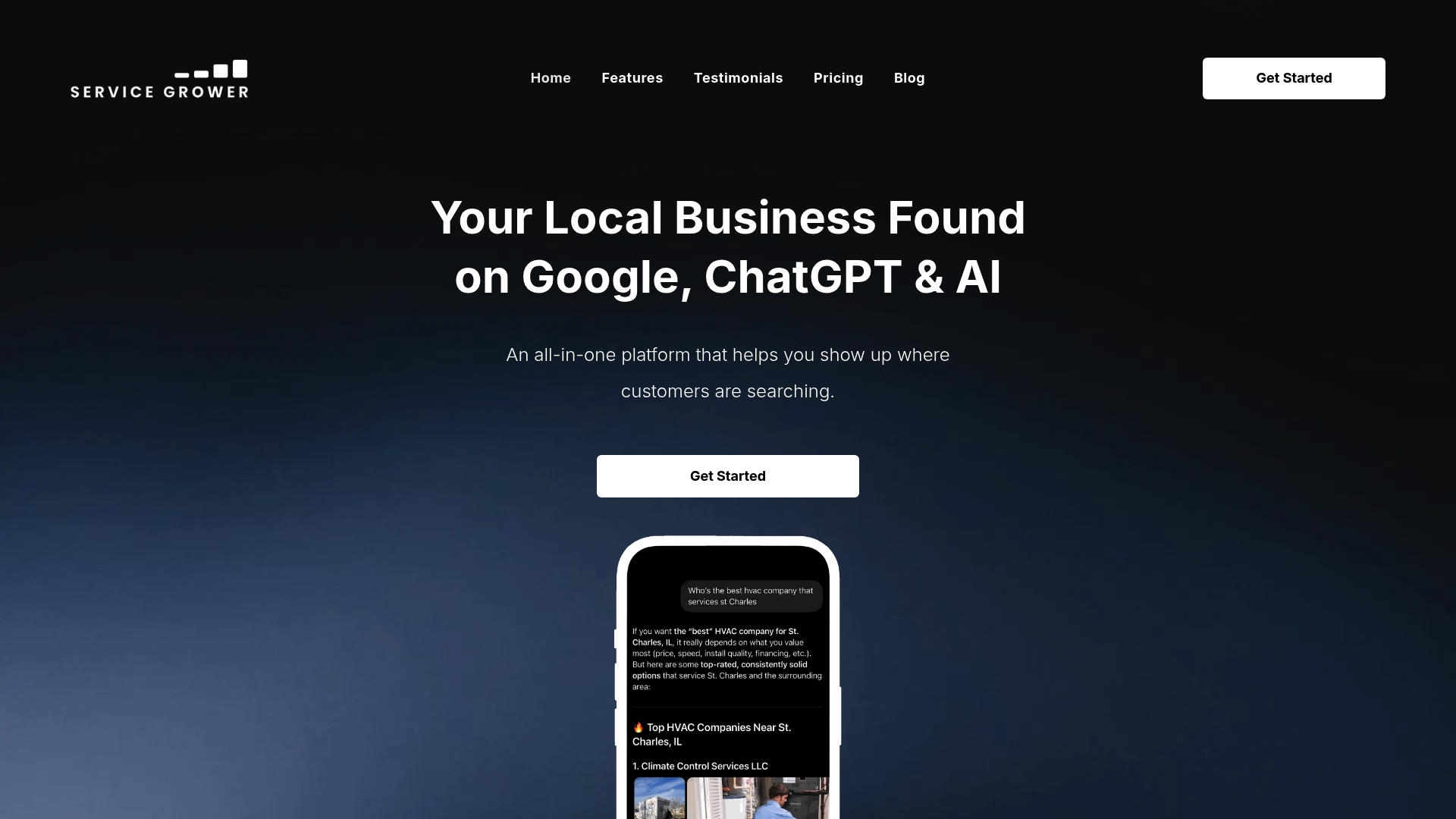
Our Service Grower plan bundles AnswerReady™ websites, SmartRequest forms, and lead delivery into one connected system, and our managed Google Ads and Meta Ads services can run the campaigns described in this guide on your behalf.
- AnswerReady™ websites with conversion-focused page structure built in.
- SmartRequest forms that qualify leads and route them straight to your team.
- Managed Google and Meta ad campaigns tied to the same delivery pipeline.
For technical site health checks alongside your ad campaigns, DBLScanner’s travel and hospitality audit tools can flag indexability and structure issues that quietly hurt landing page performance.
Book a lead-gen audit through our main platform page to see where your current setup is leaking qualified leads before you spend another dollar on ads.
FAQ
What is the 3-3-3 rule for marketing?
Definitions vary across marketing contexts, and no single sourced standard applies specifically to service business lead ads. Rather than apply an unrelated rule, focus on the metrics this guide covers: cost per qualified lead, speed to contact, and conversion to booked appointment.
What are the 7 C’s of service marketing?
This is a general services marketing framework rather than something specific to paid lead generation, and definitions of the exact seven elements vary by source. For running lead ads specifically, the practical priorities are offer clarity, form design, and fast follow-up rather than a fixed services marketing checklist.
How much should you pay for lead generation?
Cost per lead varies widely by vertical and platform, so there’s no single universal number to target. A more useful approach is to track cost per qualified lead and cost per booked appointment, since Salesforce’s lead generation guidance points to scoring and qualification as the factors that actually determine whether a lead is worth the spend.
What is the 5 minute rule for leads?
The idea is that contacting a new lead within the first few minutes after submission dramatically improves the odds of reaching them and booking an appointment, compared to waiting hours. Setting a clear internal speed-to-lead standard, and routing high-score leads to an immediate alert, is the practical way to apply this to your own follow-up process.
Sources
- Create lead form assets - Google Ads Help
- Lead generation guide — Salesforce
- CAN-SPAM Act: A Compliance Guide for Business | Federal Trade Commission