
 GROWTH GUIDE
Avoid FTC Penalties: 90 Day Plan for Restaurant Online Reviews
The essential program is simple to state and harder to skip: monitor every channel where guests leave feedback, respond within a set window, solicit new reviews ethically, and track the results monthly. Do this while following the Federal Trade Commission’s rules against fake or incentivized reviews and Google’s policy on manipulated feedback. Restaurants that build this into a weekly habit, whether through spreadsheets or a platform like Service Grower, see steadier ratings and fewer surprises.
TL;DR:
- Monitoring should include all review platforms, social mentions, and feedback forms to ensure no review goes unnoticed or unanswered.
- Fast response times are crucial, with negative reviews addressed within 24 hours and positive ones acknowledged within a couple of days.
- Responses should be personalized, varied, and empathetic, with offline resolution logged without asking guests to alter their star ratings.
- Automating review solicitation via consistent messaging through texts and emails improves review volume and compliance with FTC and Google policies.
- Using an integrated system like Service Grower streamlines review management, response, and solicitation, boosting reputation efforts efficiently.
Table of Contents
- Quick Checklist and Priorities for Restaurant Review Management
- How to Monitor Restaurant Reviews Effectively
- How to Respond to Reviews: Templates, Timing, and Tone
- Ethical Ways to Get More Restaurant Reviews
- Measuring Impact: KPIs and Reporting
- Service Grower’s Take on Building This Into Your Operation
- What Actually Moves the Needle on Reviews
- Put Review Management on Autopilot With Service Grower
- Where to Verify the Rules and Research
- Sources
- FAQ
Quick Checklist and Priorities for Restaurant Review Management
Most restaurant owners already read reviews. Few have a system for catching every one of them before a regular customer does. Here’s the baseline that separates a reactive owner from one running an actual restaurant reputation management program.

Start with coverage. Your monitoring needs to include your Google Business Profile, any review site where diners can leave feedback, direct comment cards or feedback forms, and social media mentions and tags. A review posted on a platform you never check is a review you can’t respond to, and silence reads as indifference to anyone scrolling past it.
Next, set ownership and speed:
- The general manager or a designated shift lead owns first response.
- Negative reviews (one or two-star) should be replied to promptly.
- Any mention of health, safety, or billing complaints should be escalated to the owner as soon as possible.
- Positive reviews should be acknowledged within a couple of days.
For solicitation, keep a short do/don’t list your whole staff can recite:
- Do ask happy guests directly, in person or by text, for a review.
- Do make the request identical for every guest, regardless of how the visit went.
- Don’t offer a discount, free item, or entry into a drawing in exchange for a review.
- Don’t ask a guest to remove or edit a negative review as a condition of a refund.
Close the loop with a weekly report to whoever runs operations: new review count, average rating shift, and any unresolved complaints older than 72 hours.
How to Monitor Restaurant Reviews Effectively
Coverage without structure just creates noise. You need a workflow that turns incoming reviews into assigned tasks, not a folder of tabs someone checks when they remember.
Three sources deserve a permanent spot on your monitoring list: your Google Business Profile and any other business listing where guests leave ratings, your own feedback forms (a QR code on the receipt or table tent works well), and social mentions where someone tags your restaurant without leaving a formal review. A guest complaint buried in an Instagram comment carries the same reputational weight as a one-star review, even though it never touches a review platform.
A unified inbox, whether built into a reputation tool or assembled from platform-native alerts, should let you search review history by keyword, tag reviews by issue type (service, food quality, wait time, billing), and pull up a guest’s past visits if your point-of-sale system supports it.
Set alert rules that actually matter:
- Instant notification for anyone or two star review.
- Instant notification when a repeat or high-spend customer leaves feedback.
- A weekly digest for four and five-star reviews, since these don’t need same-day action.
- A flag for sudden volume spikes, which often signal a service breakdown on a specific shift.
Pro Tip: Assign one person per shift, not per day, to do a five-minute review scan before close. Waiting until morning means a Friday-night complaint sits unanswered all weekend, which is exactly when most new diners are reading your profile.
How to Respond to Reviews: Templates, Timing, and Tone
Speed matters, but so does what you actually say. A field study on business responses and subsequent reviews found that response intensity and diversity, meaning longer, more varied replies, increase the length and detail of reviews that come afterward, while replies that closely mirror a guest’s own tone and wording increase emotional language in future reviews. In plain terms: how you respond shapes what your next reviewer writes.
Build a response structure with four parts:
- Greeting that uses the guest’s name if given.
- Specific acknowledgment of what they mentioned, not a generic thank you.
- Correction or next step, stated plainly if something went wrong.
- Invitation to continue offline, with a direct contact method for negative reviews.
Adjust your default tone by business stage. A newer restaurant still building a following benefits from detailed, varied responses that give future reviewers more to react to and more confidence in what to expect. An established restaurant working to repair a rough patch benefits more from empathetic, closely matched tone, since that similarity tends to draw out warmer, more forgiving language from the next round of reviewers.
Whenever a complaint gets resolved offline, log it. A simple CRM note or shared spreadsheet entry works: date, issue, resolution, and whether the guest agreed to be contacted again. Never ask that guest to change their star rating or offer compensation tied to doing so. You can follow up once to confirm the fix landed, and stop there.
Pro Tip: Keep three response templates on hand, not one. A single canned reply used on every negative review reads as scripted to anyone comparing your profile against a competitor’s.
Ethical Ways to Get More Restaurant Reviews
Getting more reviews is legal and encouraged. Buying, faking, or steering them is not, and the rules changed in a way every operator should know about.
The Federal Trade Commission’s final rule on consumer reviews and testimonials bans creating or buying fake reviews, offering incentives conditioned on a review being positive, using insider reviews without disclosure, and suppressing negative feedback through threats. The agency has said it will pursue civil penalties against businesses that knowingly violate it, and that liability extends to marketing agencies acting on a restaurant’s behalf. Google’s own content policy separately bars incentivized or manipulated reviews and can remove them, incentive or not.
The compliant path is straightforward automation, not manipulation:
- Send a post-visit text within two hours asking for honest feedback, with a direct review link.
- Follow with an email the next day for guests who didn’t respond to the text.
- Put a QR code on the receipt or table for walk-out guests who skip both.
- Ask every guest the same way, whether the visit went well or not.
One industry analysis on local search notes that a steady, automated request flow tends to outperform sporadic manual asks, largely because consistency beats intensity when it comes to review volume. Track your response rate to the outreach itself; if it drops sharply, you’re probably asking too often or at the wrong moment in the visit.
Measuring Impact: KPIs and Reporting
Reviews only help your visibility if they keep coming and if someone is actually watching the trend line. Recency carries real weight in local search: a business with a steady trickle of recent reviews tends to outrank one sitting on old reviews, even a highly rated one, according to the same local SEO analysis cited above.
Track these numbers monthly, not just when something goes wrong:
- Review volume (new reviews per month, per platform)
- Average rating, tracked as a rolling 90-day figure rather than lifetime
- Recency (days since last review)
- Sentiment trend (percentage positive vs. negative over time)
- Reply rate (percentage of reviews with an owner response)
- Average response time
A basic dashboard, even a shared spreadsheet, should surface these five numbers weekly and roll them into a monthly summary tied to bookings. Reviews and revenue move together more often than owners assume, and one industry analysis on small business growth links consistent review activity to measurable revenue gains.
Service Grower’s Take on Building This Into Your Operation
An integrated approach handles monitoring, response templates, and solicitation automation from one dashboard rather than three disconnected tools. That matters more than it sounds. The gap between “we should respond to reviews” and actually doing it consistently is almost always a tooling gap, not a motivation gap.
A workable rollout looks like this:
- Days 0 to 30: Audit every platform where you appear, write your response policy, and set SLAs.
- Days 31 to 60: Turn on monitoring and alerts, build your three response templates, and train whoever answers reviews.
- Days 61 to 90: Automate post-visit solicitation via text and email, and stand up your reporting dashboard.
What Actually Moves the Needle on Reviews
Most restaurant reviews advice treats star rating as the finish line. It isn’t. The research on response behavior suggests the far more valuable target is response quality, since how an owner replies visibly shapes what future guests write in their own reviews. That’s a lever most restaurants never touch.
The conventional wisdom, respond fast, thank people, move on, gets the speed part right and stops there. Speed without substance reads as scripted, and guests can tell. The restaurants that pull ahead are the ones treating every response as a small piece of content that future diners will read before they book a table, not just a courtesy to the person who left it.
If you’re starting from zero, don’t try to fix everything in week one. Get monitoring coverage locked down first. A missed one-star review sitting unanswered for two weeks does more damage than a slightly generic response sent the same day. Compliance and speed come next. Polish comes last, and honestly, it matters less than owners think.
— Service Grower
Put Review Management on Autopilot With Service Grower
Chasing reviews across five different apps, a spreadsheet, and your own memory is how restaurants lose track of a one-star review for two weeks. Service Grower is the alternative to piecing together separate tools for monitoring, responding, and requesting reviews. It combines all three into a single managed system, so your team works from one inbox instead of five logins.
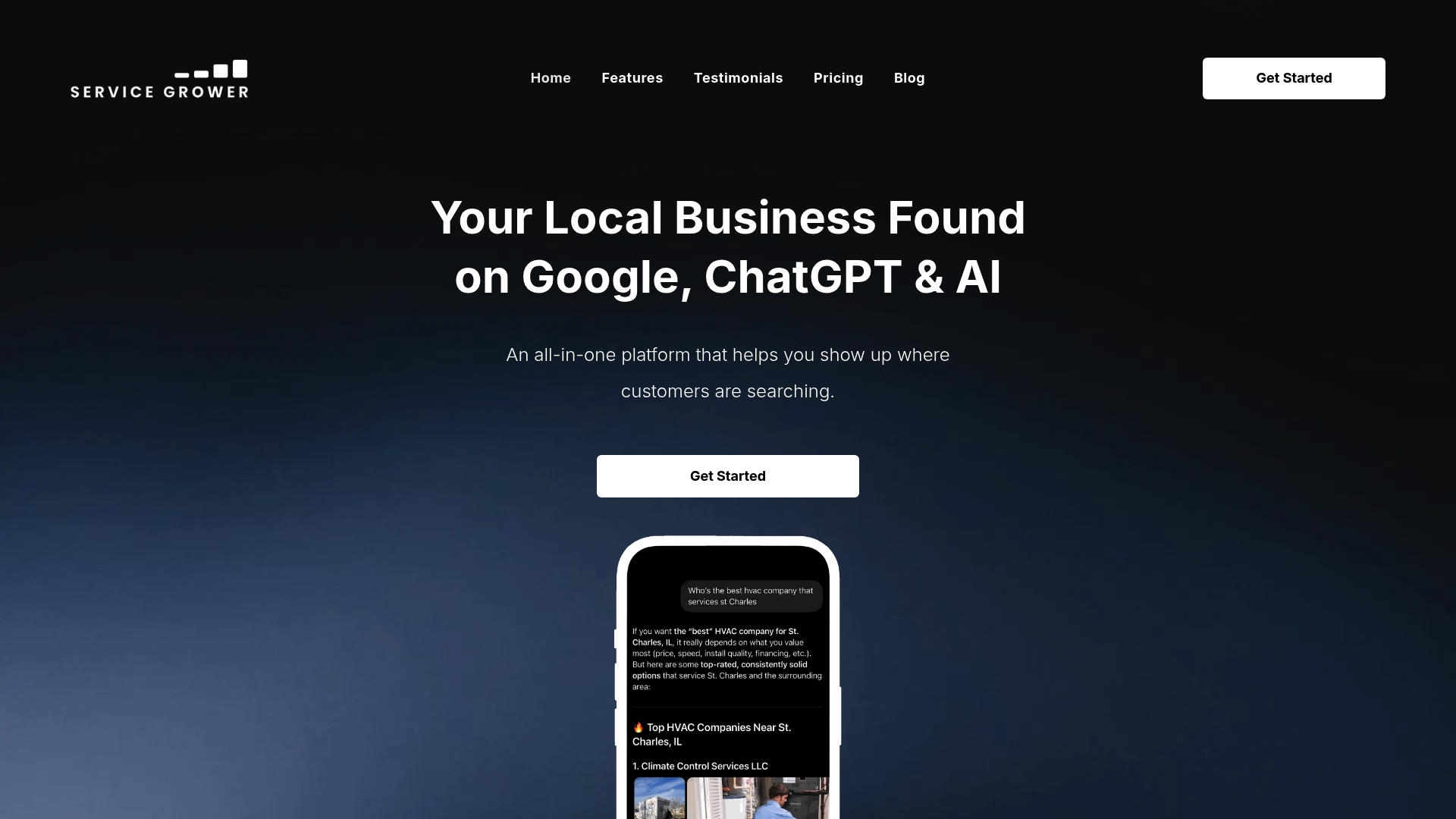
The platform pairs review management with AnswerReady websites built to surface your restaurant when people search on Google or ask an AI assistant where to eat nearby, plus outreach tools for automated post-visit text and email requests that keep your review volume steady without violating platform rules. If you’re weighing this against building it yourself or hiring an agency, see how Service Grower compares to that route.
Plans start at $249 a month. Check the pricing page and see what an integrated setup looks like for your restaurant this month.
Where to Verify the Rules and Research
- FTC Consumer Reviews and Testimonials Rule Q&A
- FTC press release on the final rule
- Google Maps content policy on reviews
- Peer-reviewed study on business responses and reviews
Sources
- The Consumer Reviews and Testimonials Rule: Questions and Answers | Federal Trade Commission
- Federal Trade Commission Announces Final Rule Banning Fake Reviews and Testimonials | Federal Trade Commission
- Prohibited & restricted content - Maps User Generated Content Policy Help
- Peer-reviewed study on the impact of business responses on subsequent online reviews (2025)
FAQ
Is It Legal to Offer a Discount for a Review?
No, not if the discount is conditioned on the review being positive. The FTC’s final rule bars incentives tied to sentiment, though you can ask every guest equally for honest feedback without any reward attached.
How Fast Should a Restaurant Respond to a Negative Review?
Within 24 hours for one and two star reviews, and same day for anything involving a safety or billing complaint. Faster responses limit how long a bad review sits unanswered at the top of your profile.
Can I Ask Google to Remove a Fake Review?
Yes. Google’s content policy allows reporting reviews that violate its rules, and platforms have increased spam removal in recent years, though some fake reviews still require a manual report and appeal.
What Does Service Grower Cost for Restaurant Review Management?
The Service Grower plan is $249 per month and includes review management alongside website and local visibility tools. Setup fees for email domain and SMS features run $25 each as one-time charges.
Does Responding to Reviews Actually Change Future Reviews?
Yes. A 2025 field study found that varied, detailed owner responses lead to longer, more detailed subsequent reviews, while responses that closely match a guest’s tone increase emotional language in the reviews that follow.