
 GROWTH GUIDE
HVAC Marketing Ideas That Actually Get Jobs Booked
If you can only do five things this year, do these: claim and fully build out your Google Business Profile, run Local Services Ads alongside it, fix speed-to-lead so calls get answered in seconds instead of voicemail, put a review-request system on autopilot, and mine your existing customer list with email and text. That order matters. GBP and Local Services Ads (LSA) drive the fastest visibility because Google trusts a verified, reviewed local business more than a cold website. Speed-to-lead comes next because a beautifully generated lead is worthless if nobody answers the phone. Set up GBP, call capture, and review requests this week. Give the content, retargeting, and referral-partner work three months to mature.
Here’s the number that should reorder your priorities: many home service customers hire whichever company answers or calls back first, and missed calls in the trades cost real booked jobs, according to industry lead-conversion data. A slow phone system undercuts every dollar spent on the tactics below.
- This week: Google Business Profile completion, click-to-call setup, review-request automation
- This month: Local Services Ads, PPC campaign restructuring, database reactivation
- This quarter: content production, referral partnerships, offline tactics with tracking
TL;DR:
- Local Services Ads and a complete Google Business Profile generate the fastest visibility and trust, making them crucial starting points before scaling other marketing channels.
- Speed-to-lead is vital, requiring a fast answering system to ensure calls are answered within seconds, as most homeowners hire the first company to respond.
- Automating review requests immediately after job completion and proactively mining existing customer data software dramatically increase repeat business and referrals.
- Tracking leads by unique phone numbers and using a CRM to attribute booked jobs to specific channels ensures accurate ROI measurement and budget allocation.
- Integrating all digital and offline tools into a single platform improves efficiency and provides clear visibility into which channels yield the most booked jobs.
Table of Contents
- HVAC Marketing Ideas Start With Your Website and Local Search Setup
- Which Paid HVAC Advertising Strategies Actually Convert?
- Content Marketing and Social Video HVAC Owners Can Actually Produce
- Why Database Marketing Beats Chasing New HVAC Leads
- Reviews and Referral Partners Multiply Everything Else
- Offline HVAC Advertising Ideas That Still Work in 2026
- Speed-to-Lead: The Operational Fix Behind Every Marketing Dollar
- Real Benchmarks Behind These HVAC Marketing Ideas
- Key Takeaways
- Sources
HVAC Marketing Ideas Start With Your Website and Local Search Setup
None of your advertising works if your website loses the visitor before they call. A slow, desktop-oriented site is the single most common reason HVAC ad spend underperforms, because the majority of organic search traffic now happens on a phone, and mobile makes up the dominant share of US organic search visits. If your site takes five seconds to load on a phone in a hot attic with two bars of signal, that visitor is already dialing a competitor.
1. Fix the technical basics first
Your site needs to load in under three seconds on mobile, show a tap-to-call button in the header on every page, and never bury your phone number below the fold. Test this yourself on your own phone, not a laptop. Most contractor sites fail this test because they were built by a designer optimizing for looks, not for someone standing in a driveway with a broken furnace.
2. Build pages that match what people actually search
A generic “Services” page can’t compete with a dedicated landing page for “AC repair in [your city]” or “furnace installation in [your city].” Search engines and AI answer engines both reward specificity. If you run ads or LSA campaigns targeting emergency AC repair, send that traffic to a page about emergency AC repair rather than your homepage. Use local business schema markup on these pages so search engines can confidently associate your business with the service areas you actually cover.
3. Treat your Google Business Profile like a second website
This is where most small HVAC shops leave money on the table. A complete profile means every service you offer is listed individually (not just “HVAC services”), photos are recent and show your actual trucks and techs, and you’re posting updates at least monthly. Enable messaging so a homeowner comparing three companies at 9 PM can ask a quick question instead of closing the tab. Set up a direct link to your review page inside the profile’s Q&A or booking flow so satisfied customers have zero friction leaving feedback.
Pro Tip: Audit your Google Business Profile the same way a stranger would find you: search your own service on your phone in incognito mode. If your competitor’s profile looks more complete than yours, that’s the gap costing you calls.
An AI-optimized website built around these fundamentals does more than look good. It’s built to be the answer search engines and AI tools surface first, which matters more every year as homeowners ask ChatGPT or Google’s AI Overviews for a recommendation instead of scrolling ten blue links.
Which Paid HVAC Advertising Strategies Actually Convert?
Google Local Services Ads should be your first paid dollar, not your last. LSAs work on a pay-per-lead model rather than pay-per-click, so you’re not paying for tire-kickers who click and bounce. Your ranking within LSA depends heavily on review count and rating, which is exactly why the review system in a later section isn’t optional. Set your daily lead cap to match what your crew can actually handle. A four-truck operation that turns on unlimited LSA spend will drown in leads it can’t service fast enough, and slow response on those leads burns the very reputation that got you ranked there.
Search-based PPC needs the same segmentation as your website. Build campaigns by service line, not one broad “HVAC” campaign, and run dedicated call-only campaigns for emergency terms like “AC not cooling” or “furnace won’t start” where the searcher wants a phone number, not a website visit. A well-structured Google Ads campaign for local business separates branded terms (people searching your company name) from non-branded terms (people searching generic services), because the cost gap between them is enormous.
That gap shows up clearly in the numbers. Blended average cost-per-lead on Google Ads for HVAC contractors is approximately $104, but branded search leads cost significantly less, about $34 per lead, with Performance Max campaigns averaging an intermediate cost; non-branded search and LSA leads tend to be more expensive, according to aggregated HVAC ad benchmarking data. If you’re not tracking cost-per-lead by campaign type, you likely have no idea whether your branded search dollars are subsidizing an inefficient broad campaign.
Retargeting fills the gap for everyone who visited but didn’t call. Someone who read your AC repair page and left is a warmer prospect than a cold audience, and a simple retargeting campaign on Facebook, Instagram, or YouTube showing a quick video testimonial or a seasonal maintenance offer can bring them back at a fraction of the cost of a fresh search click. Seasonal ad ideas that perform well:
- Spring: AC tune-up specials timed to the first warm week
- Summer: emergency repair call-only campaigns during heat waves
- Fall: furnace inspection bundles before the first cold snap
- Winter: indoor air quality upsells while crews have more capacity
Content Marketing and Social Video HVAC Owners Can Actually Produce
You don’t need a production studio. You need a phone, decent lighting, and a habit of filming while you work. Short-form video is where the audience already is, and job-site content performs because it’s real, not because it’s polished.
Blog content should target the questions homeowners type into Google before they’re ready to call: “why is my AC blowing warm air,” “how often should I change my furnace filter,” “is it worth repairing a 15-year-old AC unit.” These research-stage searches build long-term organic traffic and give AI answer engines material to cite when someone asks a similar question conversationally. Pair each post with a matching service landing page so the reader has an obvious next click.
For video, the highest-return formats for a small crew are:
- 30-second “what’s actually wrong with this unit” clips filmed during real repairs
- Before/after installs with a quick voiceover explaining the job
- “Three signs your furnace is dying” style tips filmed in under a minute
- A simple customer testimonial filmed on-site right after a job, with permission
Repurpose everything. One job-site video becomes a Google Business Profile post, an Instagram Reel, a YouTube Short, and a still image for next month’s email newsletter. Build a lightweight retargeting funnel where anyone who watches 50% or more of a YouTube video gets served a follow-up ad for a seasonal discount. Keep a running script template: hook, problem, fix, one call to action. It takes the guesswork out of filming and keeps every clip under 60 seconds, which is where completion rates are highest.
Why Database Marketing Beats Chasing New HVAC Leads
Your past customer list is the cheapest lead source you own, and most contractors barely touch it after the invoice clears. Database marketing to existing customers typically returns several times the investment compared to marketing for new customer acquisition, according to PipelineOn’s analysis of HVAC lead generation costs. That gap alone should shift how you allocate next quarter’s budget.
Maintenance agreements are the backbone of this. A customer on a seasonal tune-up plan isn’t just paying for two visits a year. They’re locked into your brand, less likely to call a competitor when something breaks, and far more likely to refer you to a neighbor.
1. Build the welcome series
New customers should get an automated email or text sequence covering what to expect, how to reach you after hours, and an invitation to enroll in a maintenance plan within the first 30 days.
2. Automate seasonal reminders
Two months before peak season, your whole database should get a tune-up reminder. This single flow often produces some of the highest-margin bookings of the year because you’re filling shoulder-season capacity before the emergency calls start.
3. Run reactivation sequences
Anyone who hasn’t booked in 18 to 24 months gets a “we miss you” campaign with a modest incentive. Segment by equipment age too. A customer with a 12-year-old system should get different messaging than someone with a unit installed last year.
Pro Tip: Connect your CRM to your dispatch software so a completed job automatically triggers the review request and the next maintenance reminder. Manual follow-up is where good intentions go to die.
Reviews and Referral Partners Multiply Everything Else
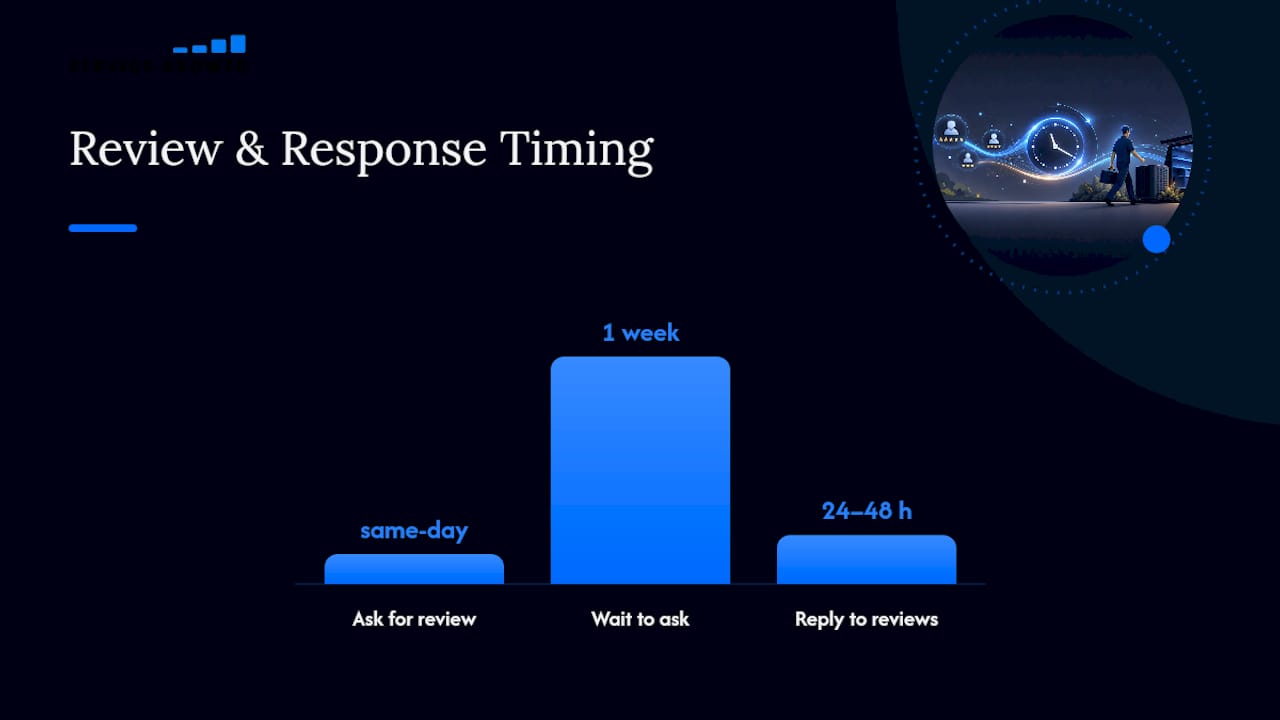
Ask for the review the same day, not a week later. A same-day SMS or email request, sent right after the technician marks the job complete, catches customers while the relief of a fixed furnace is still fresh. Wait a week and that emotional peak is gone, buried under grocery runs and school pickups.
Respond to every review within 24 to 48 hours, good or bad. A thoughtful reply to a three-star review often does more for trust than another five-star one, because it shows a prospective customer how you handle problems.
The stakes here are higher than most contractors realize. Consumers routinely check multiple review sites before choosing a service provider, and ratings that drop under four stars measurably shrink how many people even consider a business, according to Statista’s consumer research on online reviews. That rating also feeds directly into your Local Services Ads placement, so a weak review profile doesn’t just cost you organic trust. It raises your paid lead costs too.
Referral partnerships extend your reach without any ad spend:
- Property managers who need a reliable HVAC contractor for tenant issues
- Real estate agents who need fast pre-listing inspections
- Local hardware or appliance stores willing to display your cards near HVAC filters
- Home inspectors who spot aging systems during buyer walkthroughs
A simple referral program, whether it’s a flat fee per closed job or a reciprocal discount, turns these relationships into a steady secondary pipeline.
Offline HVAC Advertising Ideas That Still Work in 2026
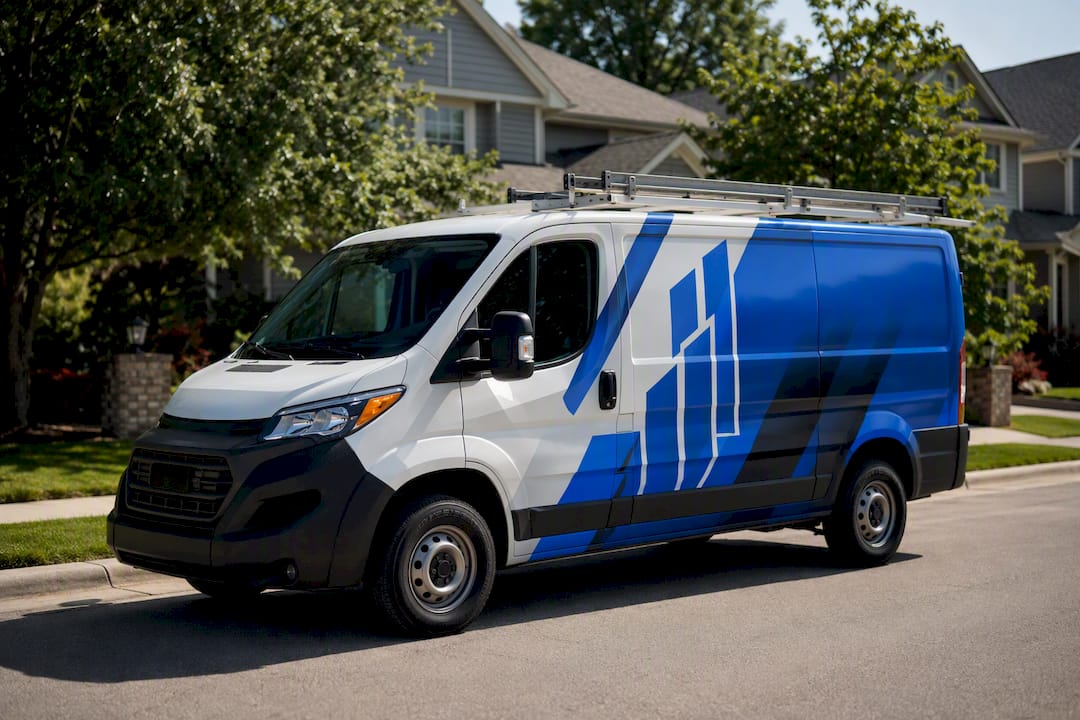
Digital tactics get the attention, but a wrapped service truck sitting in a customer’s driveway for three hours is a billboard you already paid for. A quality vinyl wrap runs for several years before it needs replacing and puts your name in front of hundreds of drivers per job, especially in suburban neighborhoods where trucks sit visibly during a repair.
Direct mail still earns its place when it’s targeted and trackable. Send seasonal tune-up offers to homes in your service area with a unique QR code or a dedicated landing page URL, so you know exactly how many calls came from that mailer instead of guessing.
Yard signs after every install work the same way real estate signs do: they signal activity and trust to neighbors who are wondering who to call when their own system fails. Sponsoring a local youth sports team or a community event puts your logo in front of the same households repeatedly, building the kind of brand familiarity that makes your name the first one a neighbor mentions.
- Truck wraps: multi-year lifespan, strongest ROI in dense residential routes
- Direct mail: pair with a QR code or unique landing page for tracking
- Yard signs: place immediately after every completed install
- Sponsorships: local teams and events for repeated, low-cost visibility
None of this replaces digital tracking. Assign a unique phone number to your truck wraps and another to your direct mail campaigns so every offline dollar shows up in the same reporting as your Google Ads and LSA numbers.
Speed-to-Lead: The Operational Fix Behind Every Marketing Dollar
You can generate a perfect lead and still lose the job in the first sixty seconds. Home service customers frequently hire whichever company responds first, and missed calls translate directly into missed revenue, a pattern confirmed across PipelineOn’s research on HVAC lead conversion. If your team is on a roof or under a house when the phone rings, that call needs somewhere to go besides voicemail.
1. Put an answering system in place
Whether that’s a live overflow answering service, an AI receptionist trained on your services and service area, or a defined after-hours routing plan, the goal is the same: every call gets a human response, fast, at every hour a homeowner might call.
2. Track by phone number, not by guess
Assign a unique tracking number to every channel: LSA, PPC, direct mail, your website, your truck wraps. Route these through your CRM so every booked job gets attributed to the channel that actually produced it, not the channel someone assumes produced it.
3. Budget with a benchmark, not a hunch
Contractors in growth mode should plan to spend around 10% of gross revenue on marketing, while established firms with steady demand can often run closer to 5–7%, according to ACCA’s marketing budget guidance. Use that percentage as a starting allocation, then shift dollars toward whichever channel your CRM shows is producing booked jobs at the lowest cost, not just the most leads.
Real Benchmarks Behind These HVAC Marketing Ideas
The commercial and residential HVAC market represents a large and steadily growing sector, according to Statista’s market sizing data, which means competition for search visibility and ad inventory will only get tighter. That backdrop is exactly why cost-per-lead discipline matters more each year.
A contractor who ranks on page one for four or five local service terms, “AC repair [city],” “furnace installation [city],” “HVAC maintenance [city],” and similar variants, typically sees a compounding effect where organic traffic starts covering a growing share of monthly bookings that used to require paid spend. That shift doesn’t happen from one blog post. It happens from the combination of a fast site, a complete Google Business Profile, consistent reviews, and months of content built around the exact phrases homeowners search.
Diversifying across organic, paid, referral, and database channels protects a contractor’s pipeline from the volatility of any single traffic source drying up or getting more expensive.
That principle, backed by Vida’s research on HVAC lead generation, is the difference between a business that panics when Google changes its algorithm and one that barely notices.
What Service Grower recommends doing first
Three things earn a spot on this week’s calendar: finish your Google Business Profile completely, put a call-capture system in place so no lead goes to voicemail, and turn on an automated review request that fires the moment a job closes. Everything else in this guide compounds on top of that foundation.
What we’ve built at Service Grower exists because these pieces usually live in five different tools that never talk to each other. An AnswerReady website, review management, lead capture, and GrowthView analytics working from one dashboard means a booked job actually shows up as a booked job, not a mystery call that nobody logged. That’s the gap that quietly kills most HVAC marketing plans: not a lack of tactics, but a lack of connective tissue between them.
If you want a second set of eyes on your current setup, a short conversation usually surfaces the one or two gaps costing you the most calls.
— Service Grower
Service Grower: how we help implement these HVAC marketing ideas
Running Local Services Ads, a mobile-optimized site, review requests, and database marketing as five separate tools is how small HVAC shops lose track of what’s actually working.
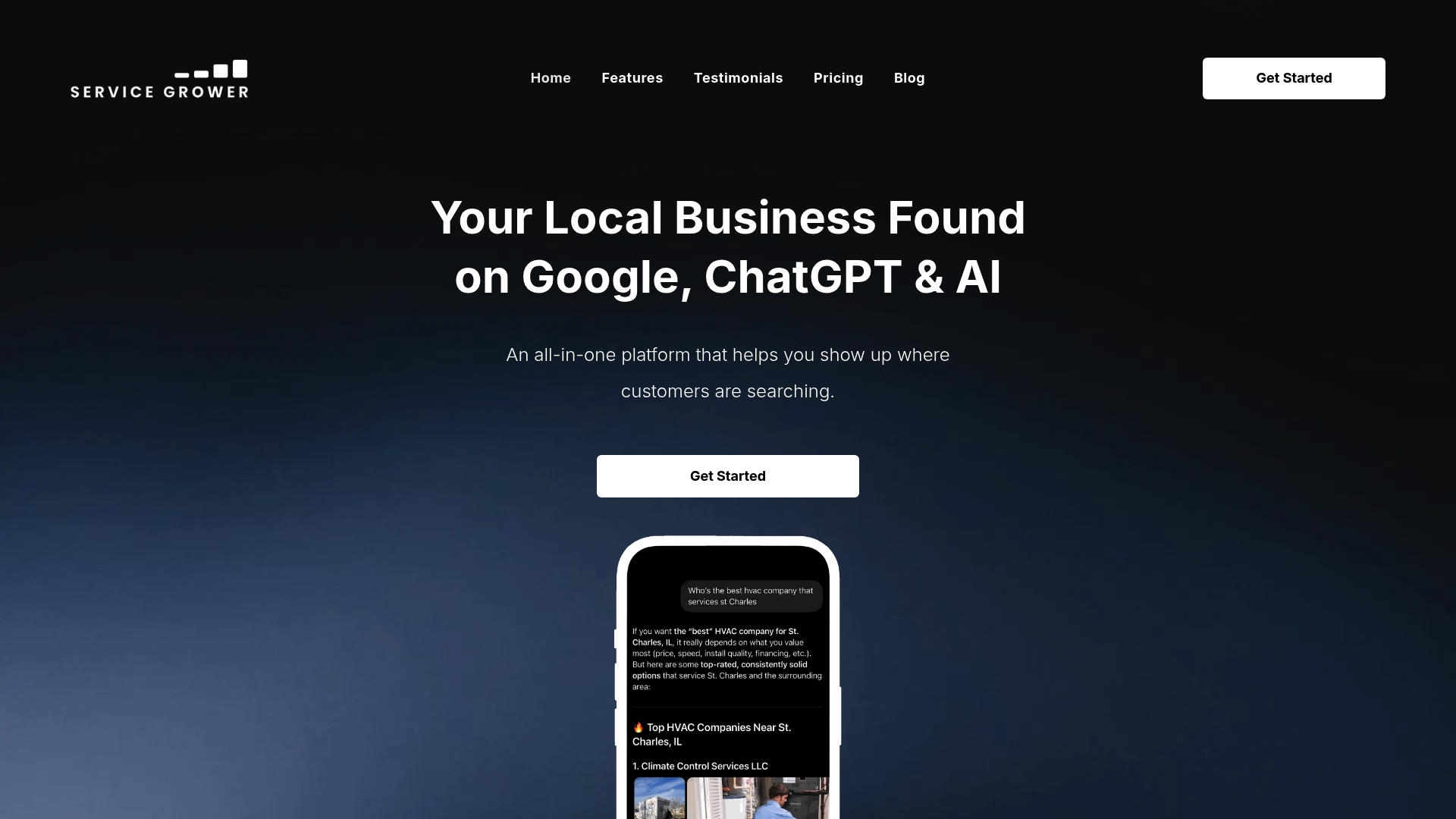
Service Grower brings these pieces into one platform built specifically for local businesses: AnswerReady websites that are optimized for how Google and AI search engines surface local answers, automated review requests that fire the moment a job closes, a lead capture system that logs every call and form submission in one place, and GrowthView analytics that show which channel actually produced a booked job, not just a click. If your current setup can’t answer “which channel got us the most jobs last month” in under a minute, that’s the gap worth fixing first.
Book a 15-minute call and walk through your current Google Business Profile, website, and lead tracking together. Most conversations surface at least one fix that pays for itself within the month.
Key Takeaways
Speed-to-lead, a complete Google Business Profile, and consistent review generation drive more booked HVAC jobs than any single ad campaign.
| Point | Details |
|---|---|
| Start with GBP and LSA | Complete your Google Business Profile and launch Local Services Ads before scaling other paid channels. |
| Fix speed-to-lead first | Set up overflow answering or an AI receptionist so no call goes to voicemail during business hours. |
| Mine your existing database | Automated email and SMS to past customers can return several times the investment spent on reactivation. |
| Track by booked job, not lead | Use unique phone numbers per channel and route them through your CRM to see true cost per booked job. |
| Use one platform to connect it all | Service Grower combines AnswerReady websites, review management, lead capture, and GrowthView analytics in a single dashboard. |