
 GROWTH GUIDE
Six Steps to Centralize Customer Messages for TCPA Safe U.S. Teams
Centralize customer messages in a single shared customer hub that merges email, text, chat, social, and voice into persistent customer profiles. Most customers now contact brands through multiple channels and expect a consistent experience across all of them, according to the State of Customer Experience 2025 Report. A shared hub cuts repeated questions, speeds up first response, and keeps every conversation tied to one customer record.
TL;DR:
- Centralizing customer messages reduces repeat inquiries, speeds response times, and improves first-contact resolution by providing agents with full conversation histories.
- Implementing a shared customer hub involves a step-by-step process that includes inventory, classification, defining customer records, and piloting with high-volume channels.
- Choosing a messaging platform requires checking integration capabilities, threading, consent synchronization, automation context, and transparent pricing.
- Ensuring compliance involves maintaining a real-time suppression list, logging consent, and separating transactional from promotional messages to meet FCC regulations.
- Effective workflows incorporate context-preserving automation, skill-based routing, and gradual rollout to maintain team efficiency and customer satisfaction.
Table of Contents
- Why centralizing customer messages pays off
- A step-by-step checklist for centralizing conversations fast
- What to look for when choosing a messaging platform
- Connecting each channel: what actually trips teams up
- Compliance and data hygiene for U.S. messaging programs
- Designing workflows so automation helps instead of hurts
- Rolling out centralization without losing the team
- Why integrated messaging matters more for local businesses
- How we help you centralize customer messages
- FAQ
- Sources
Why centralizing customer messages pays off
When every channel feeds one record, your team stops asking customers to repeat themselves. A rep who picks up a text thread can see the email from last week and the chat from yesterday, so the conversation moves forward instead of starting over. That continuity shows up directly in first-response time and in how many tickets get resolved on the first contact.
Centralized messages also become usable data. Instead of living in scattered inboxes, conversations turn into a record you can mine for retention signals, common complaints, and upsell moments. Unifying conversation context with AI-assisted handoffs helps agents resolve issues faster and handle more cases without burning out, per the State of Customer Experience 2025 Report.
The practical gains cluster around a few areas:
- Fewer repeat inquiries because agents see the full history instantly.
- Faster first response since no one hunts across five apps for context.
- Better retention data because every message becomes part of the customer’s record.
Most customers use multiple channels to reach a business and expect consistent treatment across them, which is exactly what a unified system addresses, according to the State of Customer Experience 2025 Report.
A step-by-step checklist for centralizing conversations fast
Centralizing messages is not a single switch you flip. It is a sequence, and skipping steps tends to create new silos instead of removing old ones.
- Inventory every channel where customers currently reach you, including shared email boxes, personal cell numbers used for texting, web chat widgets, and social DMs.
- Classify what counts as a customer message versus internal chatter, so you only route real customer work into the hub.
- Define a canonical customer record with the fields you actually need: contact info, channel history, consent status, and open requests.
- Set ownership and SLAs per channel, deciding who answers texts within the hour and who handles email within a day.
- Stand up the shared inbox or hub and connect a synced suppression list so opt-outs apply everywhere at once.
- Pilot one use case, such as appointment reminders or review requests, and measure the outcome before expanding further.
Each step builds on the last. Skip the canonical record and you end up with a shared inbox that still shows five different versions of the same customer.
Pro Tip: Run the pilot on your highest-volume channel first. That’s where centralization pays off fastest and where problems surface soonest.
What to look for when choosing a messaging platform
The platform you pick determines whether centralization sticks or quietly falls apart after a few months. Look past the demo and check these specifics.
- Integration breadth: confirm the platform has real APIs for email, SMS with 10DLC support, social DM channels, and your booking or CRM system, not just a few of them.
- Shared inbox mechanics: threading, tagging, assignment rules, and visible SLA tracking matter more than a clean interface.
- Suppression and consent syncing: the platform should maintain one permanent suppression list that updates every sending system in real time.
- Automation with context preservation: when a bot hands off to a human, the full thread and intent tags should travel with it, not just the last message.
- Reporting and audit trails: you need to see who touched a conversation and when, both for coaching and for compliance reviews.
Pricing transparency is worth a hard look too. Vague tiered pricing that only reveals real costs after a sales call is a common sign of future lock-in.
Pro Tip: Ask any vendor exactly how suppression list updates propagate across channels. If the answer involves manual exports, keep looking.
Connecting each channel: what actually trips teams up
Every channel has its own quirks once you try to fold it into one hub.
- Email: set canonical threading so replies don’t fork into duplicate conversations, define who can reply from the shared address, and check deliverability regularly so centralized replies don’t land in spam.
- SMS: keep consent records tied to each number, sync suppression lists in real time, and align your sending setup with 10DLC and Campaign Registry requirements for deliverability.
- Social DMs: expect API rate limits and permission scopes that restrict what you can pull in, and remember that some platforms treat DMs as ephemeral, so you may need to capture summaries rather than full threads.
- Web chat: link each chat session to the persistent customer profile immediately, and set a clear storage policy for transcripts.
- Voice: store call transcripts or summaries attached to the same profile, since a missed voicemail with no written trail breaks the continuity the rest of the hub provides.
Getting each of these right individually is what makes the combined hub trustworthy instead of just another dashboard.
Compliance and data hygiene for U.S. messaging programs
Centralizing channels means centralizing risk too, especially for text messaging. The FCC’s Second Report and Order expanded Do-Not-Call protections to cover text messages and clarified that marketing texts and calls require prior express written consent, per FCC rule DA-24-910A1. Opt-out requests have to be honored promptly and applied everywhere that customer might receive a message again.
The practical core of compliance is a real-time, centralized suppression list. A canonical, immutable suppression table with event-driven sync to every sending system is the standard way to prevent accidental violations that come from fragmented databases, according to LeadCompliant’s SMS compliance guide.
Keep these practices in place:
- Log consent at the moment it’s captured, including timestamp and source, for audit purposes.
- Separate transactional messages (appointment reminders, order updates) from promotional ones, since they carry different consent rules.
- Treat 10DLC registration as a deliverability step, not a substitute for TCPA-compliant consent, per IDT Express’s TCPA compliance guide.
- Review suppression sync logs periodically to confirm every channel actually respects opt-outs.
A centralized, real-time suppression list is the core control that prevents compliance gaps between channels, according to LeadCompliant.
Designing workflows so automation helps instead of hurts
Automation should hand off to a human before frustration sets in, not after. When a bot can’t resolve a request, the handoff needs to preserve context: the full thread, any intent tags, and enough detail that the next person doesn’t ask the customer to start over.
A few patterns keep this consistent:
- Use version-controlled templates and macros so tone doesn’t drift between agents or over time.
- Route escalations by skill and SLA, not just by whoever is free.
- Set clear fallback thresholds, such as after two failed automated attempts, to trigger human review automatically.
- Sample completed conversations regularly and score them for tone and policy alignment.
AI-driven consistency checks can benchmark replies across channels, flag tone drift, and route uncertain cases for human review before anyone updates the playbook, per The Pedowitz Group’s analysis of omnichannel consistency. That kind of automated check reduces manual QA time substantially while keeping brand voice intact.
Pro Tip: Set your escalation threshold low at first. It’s easier to loosen it later than to repair a backlog of frustrated customers.

Rolling out centralization without losing the team
A narrow pilot beats a company-wide switch on day one.
- Pick one use case with clear success metrics: first contact resolution, first response time, and customer satisfaction.
- Assign governance early, naming who owns the playbook, who approves changes, and how often it gets reviewed.
- Train on quick wins first, showing the team how much time the hub saves on their most repetitive task.
- Track a small dashboard of the same three or four metrics every week so progress is visible, not assumed.
Once the pilot metrics hold steady for a few weeks, expand channel by channel rather than all at once.
Why integrated messaging matters more for local businesses
We built our platform around the idea that messaging, presence, and reputation can’t live in separate tools without creating gaps. When a local business’s booking requests, reviews, and customer texts all flow into one managed system, nothing falls through the cracks between a Google search and a confirmed appointment.
Centralized messages also strengthen local discovery. A business that responds fast and consistently across channels tends to convert more inquiries into bookings, and that responsiveness feeds directly into the reviews and ratings that shape local search visibility. We treat that connection as central to how our AI presence tools work alongside messaging, not as two separate problems.
— Service Grower
How we help you centralize customer messages
We built our Customer Hub so your team never has to piece together five different tools to see one customer’s full history. Email, text, and lead inquiries flow into one place, tied to a persistent profile, so whoever answers next has the full picture already in front of them.
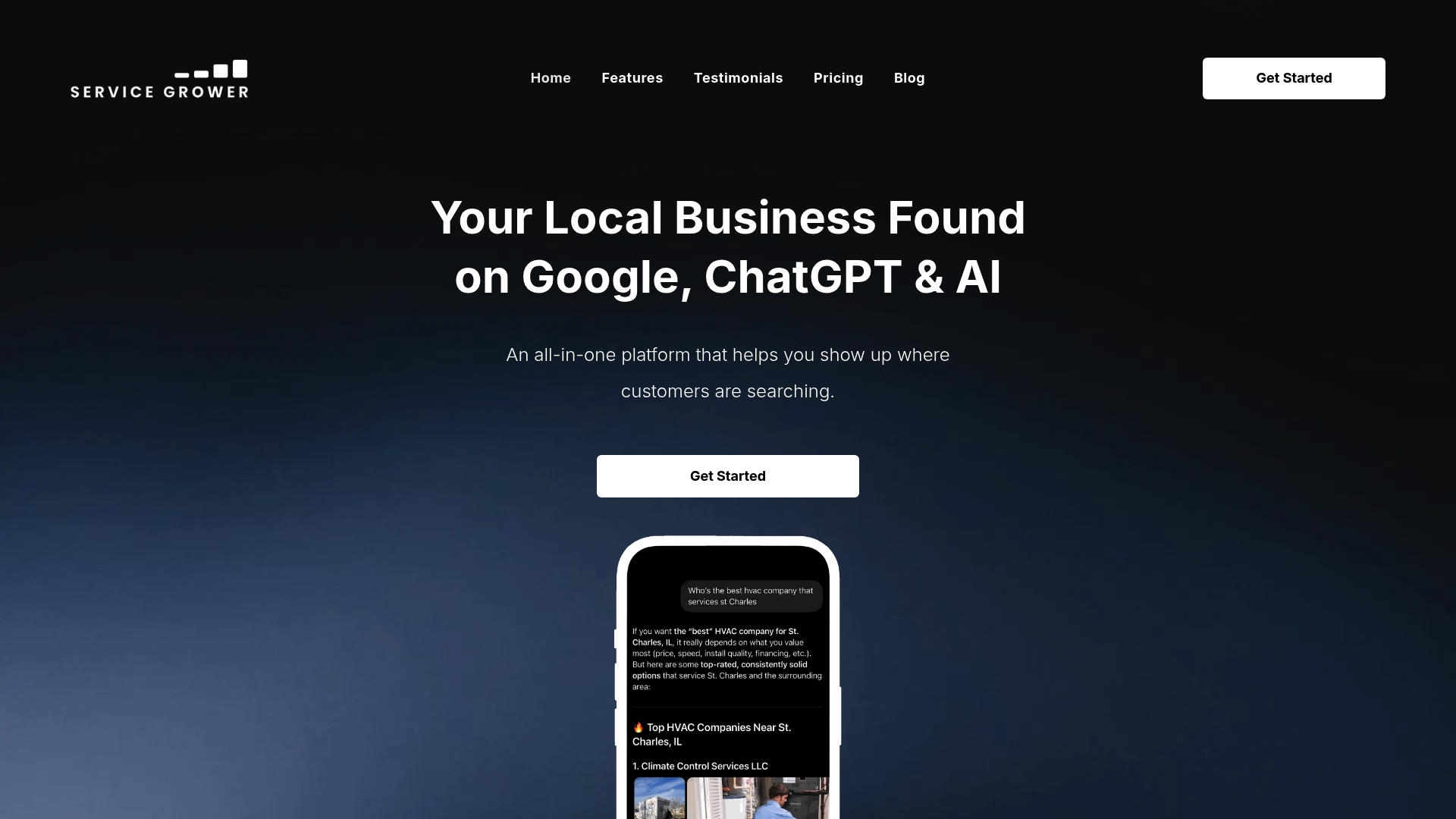
Our email and text marketing tools connect directly to that same hub, which means appointment reminders, review requests, and promotional texts all respect the same suppression list and consent records instead of living in a separate system with its own rules. Setup for email domains and SMS sending runs through our platform, with domain setup at $25 one-off and SMS setup at $25 one-off.
If you manage a local business and want messaging, presence, and reviews working from the same record instead of five disconnected apps, start with our Service Grower plan at $249 per month and see what a single hub does for your response times.
FAQ
What is a centralized email?
A centralized email setup routes every customer email into one shared inbox or hub instead of scattered personal inboxes, so any team member can see the full history and reply with context. It typically includes threading, tagging, and assignment rules so nothing gets answered twice or missed entirely.
How do I write a message to a customer?
Lead with the answer to their question before adding context, keep the tone consistent with your brand’s templates, and confirm any next step clearly. Pulling up their prior conversation history in a centralized hub before replying helps you avoid asking them to repeat information they already gave you.
Can I text customer service?
Yes, many businesses now handle customer service over text, but marketing texts require prior express written consent under FCC rules, and opt-outs must be honored across every system that might message that number again, per FCC rule DA-24-910A1. Transactional texts like appointment confirmations generally carry different consent requirements than promotional ones.
What does it mean to centralize data?
Centralizing data means pulling information that used to live in separate systems, like email, text logs, and chat transcripts, into one canonical record per customer. For messaging specifically, that record becomes the single source of truth agents check before responding, which is what omnichannel marketing strategies rely on to keep interactions consistent.
Sources
- State of Customer Experience 2025 Report — Verint
- In Targeting and Eliminating Unlawful Text Messages, Second Report and Order — FCC (DA-24-910A1)
- Text messaging for business marketing: the complete guide — LeadCompliant
- Omnichannel support consistency analysis with AI — The Pedowitz Group